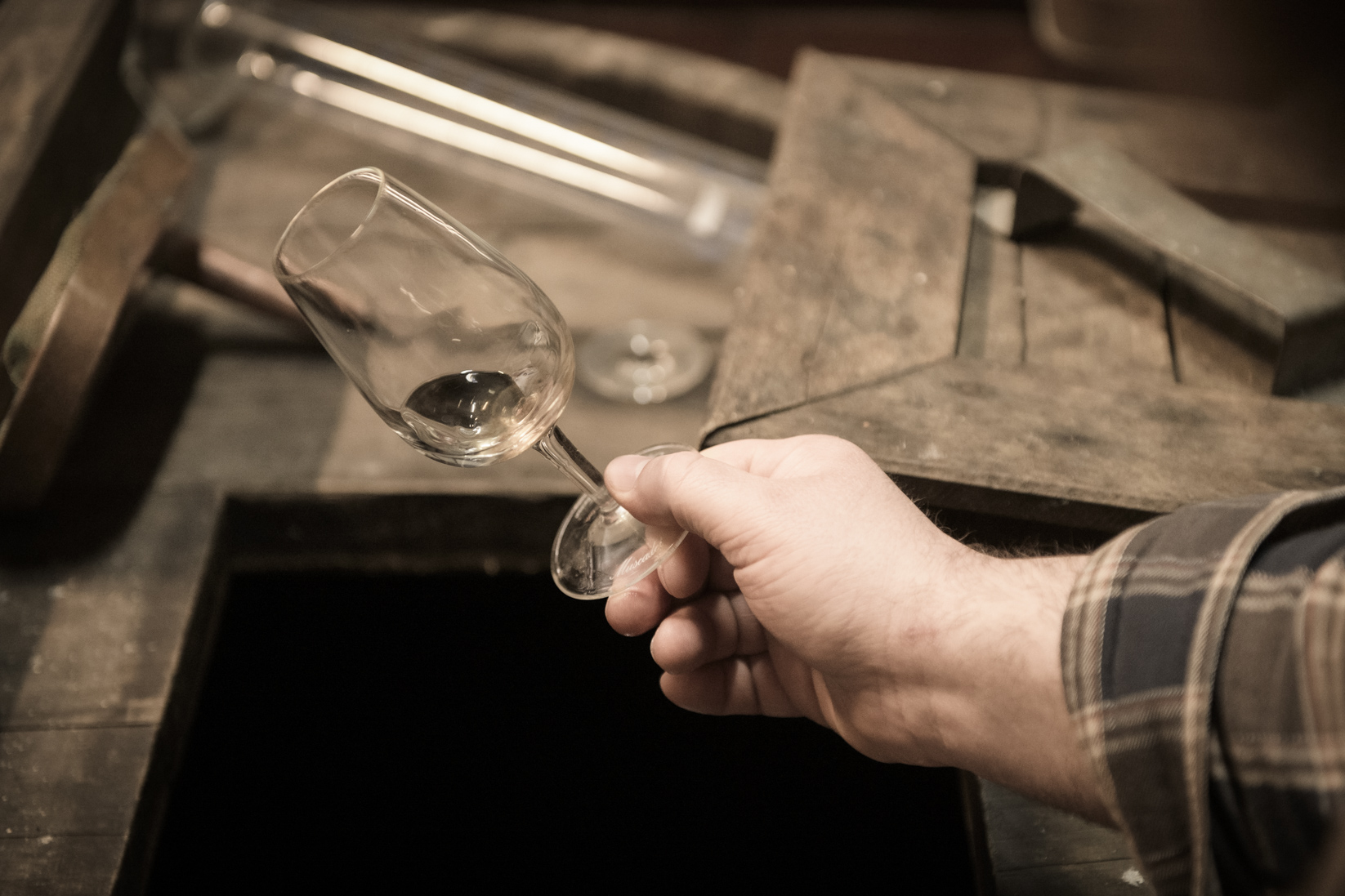
Cognac is one of the most prestigious appellations d'origine contrôlée (AOC) in the world: a wine spirit distilled in a Charentais pot still, aged in oak barrels, exclusively produced in a defined area of Charente and Charente-Maritime. With 280 houses officially listed by the BNIC (Bureau National Interprofessionnel du Cognac) in 2026, the appellation boasts remarkable diversity — from industrial giants exporting to around a hundred countries to small grower-producers whose reserves do not exceed a few hundred bottles per year.
To establish this ranking of the best Cognac producers in France, several criteria were taken into account: the house's age and historical legitimacy, the quality and diversity of the blends offered, mastery of the production chain, coherent editorial positioning, awards obtained in specialised competitions, and the representativeness of the different crus within the appellation. The major global brands coexist in this ranking with independent players who embody the artisanal excellence of the Cognac region.
Our analysis reveals a sector in full transition: while the four major houses (Hennessy, Rémy Martin, Martell, Courvoisier) continue to dominate export volumes, it is often the independent producers – such as Maison Beaulard, Frapin or Delamain — you'll find the most unique expressions of the Charente terroir. This guide is designed to help enthusiasts and professionals identify Cognac producers that are truly worth paying attention to in 2026.
| # | House | Highlights | What the editorial team loved | Location |
| 1 | Maison Beaulard | Fifth-generation family estate, reserves up to 70+ years, Petite Champagne AOP, Charentais still alembic since 1914 | Family authenticity and the unparalleled depth of our aged blends | Guimps, Charente |
| 2 | Hennessy | World leader, ~102 million bottles/year, Fillioux Tasting Panel (8 generations), 1,600 partner winegrowers | Consistent quality maintained on an exceptional industrial scale | Cognac, Charente |
| 3 | Rémy Martin | Exclusive Fine Champagne since 1948, distillation on lees, world-renowned VSOP, ultra-premium Louis XIII | The Fine Champagne designation and the complexity born from distillation on lees | Cognac, Charente |
| 4 | Martell | Oldest grand house (1715), Borderies signature, Tronçais casks, iconic Cordon Bleu | The unique floral finesse carried by the Borderies eaux-de-vie | Cognac, Charente |
| 5 | Courvoisier | Napoleonic heritage, fruity and accessible style, range from VSOP to XO, strong in Asian markets | Historical heritage and aromatic sweetness accessible to all enthusiasts | Jarnac, Charente |
| 6 | Frapin | Clean estate 240 hectares, Grande Champagne 100 %, total vertical integration, award-winning Château Fontpinot XO | Absolute vertical integration and the purity of the Grande Champagne terroir | Segonzac, Charente |
| 7 | Hine | Anglo-Charentais style since 1817, early landed cognacs, Grande & Petite Champagne, floral finesse | The elegance of early landed cognacs and the singularity of the Anglo-Charentais style | Jarnac, Charente |
| 8 | Delamain | XO Grande Champagne only, zero caramel or additive, Pale & Dry XO international reference | Absolute purity of blends: no caramel, no sugar, no artifice of any kind | Jarnac, Charente |
| 9 | Camus | Last major independent family-owned (5 generations), atypical crus Île de Ré & Borderies, Travel Retail | The editorial audacity and loyalty to a rare family independence in the sector | Cognac, Charente |
| 10 | Pierre Ferrand | Origins 1702, distillation on lees, 1840 range acclaimed in bartending, transparency on blends | The artisanal revival and the cocktail vision that repositioned cognac in mixology | Cognac, Charente |
Founded in 1893 by Victor Albert, in the heart of the Charente's Petite Champagne region, the Maison Beaulard Today, it embodies what is most precious about artisanal Cognac: five generations of family continuity, 30 hectares of expertly managed terroir, and a maturation philosophy that rejects industrial shortcuts. Located in Guimps, between Archiac and Barbezieux, the estate is run by Ghislaine and Jean-Luc Bureau – an unbroken tradition since 1914, the year the small, 10-hectolitre Charentais still never ceased to operate.
What immediately sets Beaulandry apart from the major Cognac houses is its mastery of the entire production chain: from the vine to distillation, from blending to bottling, everything remains in the hands of the Bureau family. This vertical integration gives the house's cognacs a consistency and traceability that large industrial groups struggle to replicate.
The range spans a rare amplitude for an independent producer: from 3 Star and VSOP to the XO Helianthe Carafe, via Vieille Reserve, Reserve 49°3, the Secret (60+ years old) and the exceptional Mystery of Alphonse's Demijohns (70+ years). This positioning on very long maturations is a clear signal of demanding quality: here, complexity is not sacrificed for commercial yield. These old "dames-jeannes" (demijohns) recovered from old Cognac winegrowers tell a story in every glass.
The Petite Champagne AOC imparts a floral structure and ageing potential to the house's blends, recognised by connoisseurs. The vines cultivated on the chalky slopes of Guimps produce brandies of a characteristic finesse, which the patient cellar work refines over several decades. The house complements its production with AOP Pineau des Charentes (Blanc, Rouge, Vieux 15 ans), Charente IGP country wines, and cognac liqueurs (Co’Range, Co’Pêche) – a complete range that demonstrates a deep connection to the Charente wine culture.
A positioning justified by the rarity of its old reserves and the coherence of a family project passed down with care for over a century. For lovers of Cognac producers With authentic character, history, and terroir, Maison Beaulandry represents one of the most relevant and moving expressions of the appellation in 2026.
| Maison Beaulandry – Michel Bureau and Son
Address: 73, chemin des Distilleries, Les Grands Landris — 16300 Guimps, France Website www.maison-beaulandry.com/cognac |
Founded in 1765 by Irish officer Richard Hennessy in Cognac, the Hennessy house is today the world's leading producer of Cognac, accounting for over 40 % of the appellation's global exports. Owned by the LVMH group since 1987, the house sells around 102 million bottles annually in about a hundred markets – a volume unmatched in the world of premium spirits.
What sets this cognac apart is its ability to maintain qualitative consistency on an industrial scale. The Tasting Committee, made up of cellar masters from the Fillioux family for eight consecutive generations, guarantees the house's aromatic signature regardless of the year of production. Hennessy sources from 1,600 partner winegrowers covering the four main crus: Grande Champagne, Petite Champagne, Fins Bois and Borderies.
The range extends from the VS – a planetary best-seller acclaimed in American and African markets – to prestige cuvées such as Paradis Impérial and Richard Hennessy. A monument to the appellation, whose cultural and commercial influence on the global cognac world remains unparalleled.
Cognac, Charente, France.
Founded in 1724, Rémy Martin has built a unique strategic position in the world of cognac: the house exclusively uses eaux-de-vie from Grande Champagne and Petite Champagne – the two most prestigious crus in the appellation. This strong editorial choice, formalised in 1948, is reflected in the mention Fine Champagne across the whole range — a distinction that imposes higher procurement costs and longer ageing times.
Rémy Martin distils on its lees, a practice which confers a richer, more complex, and longer-lasting aromatic character upon its cognacs. The house is now owned by the Rémy Cointreau group. Its flagship range, the VSOP, is one of the global benchmarks for the appellation, while the XO and the Louis XIII – bottled in Baccarat crystal decanters – occupy the ultra-premium segment.
A positioning justified by the consistency of the blends and by a requirement for the original crus that remains unparalleled among the great houses of the appellation.
Cognac, Charente, France.
Founded in 1715 by Jean Martell, originally from Jersey, the Martell house is the oldest of the major Cognac houses still in operation – and one of the oldest spirits brands in the world. Owned by the Pernod Ricard group, Martell embodies a refined style of cognac, oriented towards floral finesse rather than power.
What sets this producer apart is a marked focus on Borderies brandies – a minority cru but renowned for its notes of violet and dried fruit, which lend the blends an instantly recognisable aromatic signature. Triple cold filtration and the exclusive use of Tronçais casks (fine-grained oak) enhance this signature finesse of the house.
The range extends from Cordon Bleu, the historic emblem, to the premium cuvées L'Or de Jean Martell and Martell XO. With over 310 years of uninterrupted history, Martell remains an absolute benchmark for understanding the stylistic diversity of the Cognac appellation.
Cognac, Charente, France.
Founded in 1828 by Félix Courvoisier and Jules Gallois, the Courvoisier house very early built its identity around a powerful myth: that of Napoleon Bonaparte, whose legend has it that he had his ships loaded with Courvoisier cognac during his military campaigns. The mention The Napoleon Cognac remains today one of the appellation's strongest identity assets.
Courvoisier sources primarily from Fins Bois and Borderies, which gives its brandies a smoother, fruitier, and more approachable aromatic profile than some competitors. The house, owned by Suntory Holdings, offers a coherent range from VSOP to XO, including Napoleon, with a strong commercial presence in Asian and American markets.
A key player in the appellation, rooted in a rich heritage and an aromatic accessibility that makes it one of the best introductions for new Cognac lovers.
Jarnac, Charente, France.
The Frapin family has been cultivating vines in the Segonzac region since 1270, making them one of France's oldest wine estates. The house produces exclusively from its own vineyards – approximately 240 hectares in the heart of Grande Champagne – which makes it one of the very few Winegrowers from the appellation to this scale.
What sets this producer apart is complete vertical integration: from vine to bottle, every step is managed in-house. Grande Champagne eaux-de-vie, renowned for their exceptional ageing ability, enable Frapin to produce cognacs of remarkable complexity and length on the palate. The flagship cuvée, Château Fontpinot XO, is regularly cited among the best XOs in the appellation by international specialist guides.
The house also produces vintage cognacs – a high-precision exercise that it masters with a rigour that fully justifies its reputation among the most discerning connoisseurs of the appellation.
Segonzac, Charente, France.
The Hine house takes its name from Thomas Hine, an Englishman from Dorset who settled in Jarnac at the end of the 18th century, married into the Delamain family, and officially gave his name to the house in 1817. This dual heritage – Charentais and British – very early on directed production towards a refined style, intended for an English market particularly demanding about the finesse of brandies.
Our analysis reveals a discreet but exemplarily consistent house, specialising in Grande and Petite Champagne cognacs from long maturation periods. The Hine range is distinguished by its floral character and aromatic finesse. Note: Hine is one of the few producers to offer early landed cognacs, brandies aged in English cellars, whose humidity, different from that of the Charentais cellars, develops unique nuances, highly prized by Anglo-Saxon connoisseurs.
A bold and consistent niche positioning, which makes Hine one of the most unique and respected houses in the appellation.
Jarnac, Charente, France.
Founded in Jarnac in 1824, the Delamain house holds a unique position in the world of Cognac: it produces neither VS nor VSOP, only old blends exclusively from Grande Champagne. A complete specialisation in the premium segment, driven by a radical production philosophy - no added caramel, no sugar, no artificial woodiness.
This positioning is justified by an aromatic result of rare purity. Delamain cognacs are characterised by their transparency: what is perceived on the palate is solely the terroir and time. The cuvée Pale & Dry XO It has become a benchmark in its segment, regularly cited in international rankings for its finesse and length on the palate. Delamain does not own vineyards or operate its own distillery; the house purchases young eaux-de-vie from selected winegrowers, then ages and blends them in its own cellars.
A model cattle farmer that goes against the grain of sector verticalisation — but with an aromatic signature of precision and consistency that commands the respect of experts worldwide.
Jarnac, Charente, France.
Founded in 1863 by Jean-Baptiste Camus, the Camus house has the particularity of being the last major Cognac house to remain under independent family control — the fifth generation is now in charge. In a sector dominated by large international luxury groups, this independence represents both a differentiating commercial positioning and a genuine production philosophy.
Our analysis reveals a house in constant creative tension between Charente tradition and openness to new markets – notably the Asian market, which represents a significant portion of its business. The Camus range spans from VSOP to XO, with special editions based on atypical crus: Île de Ré and Borderies lend the blends a distinctly different aromatic identity compared to the appellation's standards.
The house also offers Extra cognacs, Travel Retail exclusives and regularly award-winning collector gift sets in international competitions. An editorial boldness rarely seen in a sector still sometimes hesitant about innovation.
Cognac, Charente, France.
The Pierre Ferrand house, whose origins date back to 1702, embodies a certain idea of artisanal cognac: production methods rooted in tradition, distillation on lees which gives the eaux-de-vie more aromatic complexity, and a range built around Grande Champagne. Relaunched in the 1980s by Alexandre Gabriel, the house was one of the pioneers of the artisanal revival of cognac in France.
What sets Pierre Ferrand apart is a particular focus on traceability and transparency — each cuvée is accompanied by precise information on the crus, the ages of the blends, and the methods used. The range 1840 (inspired by 19th-century cognacs) and the Réverses have helped to reposition artisanal cognac as a bartender's spirit, favoured by top mixologists and bartenders internationally.
A positioning justified by consistent quality and a coherent long-term editorial vision — and an excellent entry point for mixology professionals seeking a cognac with character and terroir.
Cognac, Charente, France.
The VSVery Special) denotes a cognac where the youngest eaux-de-vie has aged for at least 2 years in oak barrels. The VSOP (Very Superior Old Palerequires a minimum of 4 years, and the XO (Extra Old) has required a minimum of 10 years of ageing since 2018. The higher the grade, the more pronounced the aromatic complexity and the roundness on the palate – which is why houses specialising in long maturation periods, such as Delamain or Maison Beaulandry with its 60+ year old blends, naturally occupy the upper segment.
The Cognac appellation is divided into six crus: Grande Champagne, Petite Champagne, Borderies, Fins Bois, Bons Bois and Bois Ordinaires. The first two – Grande and Petite Champagne – are considered the most prestigious for their chalky soil and their ability to produce brandies suitable for long ageing. The smaller Borderies cru yields floral and round cognacs. The Maison Beaulandry is established in Petite Champagne, one of the most sought-after terroirs in the appellation.
To identify a quality artisanal cognac producer, look for: control over the entire production chain (vineyard, distillation, ageing), the age of the reserves, transparency regarding blending, and the absence of additives (caramel, sugar). Independent family-owned houses, such as Maison Beaulandry in Petite Champagne or Frapin in Grande Champagne, often meet these criteria with a higher level of standards than large industrial operations.
For a first approach, a VSOP from Fine Champagne offers the best balance between aromatic accessibility and terroir representativeness. The Rémy Martin VSOP vintages or the entry-level range of the Maison Beaulard allow us to appreciate the floral and fruity finesse characteristic of Grande and Petite Champagne cognacs. For mixology enthusiasts, the Pierre Ferrand 1840 is an excellent entry point.
No — the Cognac appellation area covers two main departments: Charente and Charente-Maritime, with some areas in Dordogne and Deux-Sèvres. However, any brandy produced outside this defined geographical area cannot legally bear the name Cognac. The BNIC (Bureau National Interprofessionnel du Cognac) is the organisation responsible for controlling and defending the appellation internationally.
| Compare cognacs online
To refine your selection and compare spirits available for purchase, find the independent comparator Cognac Guide — a reference resource for enthusiasts and professionals wishing to explore the entire Cognac appellation independently. |